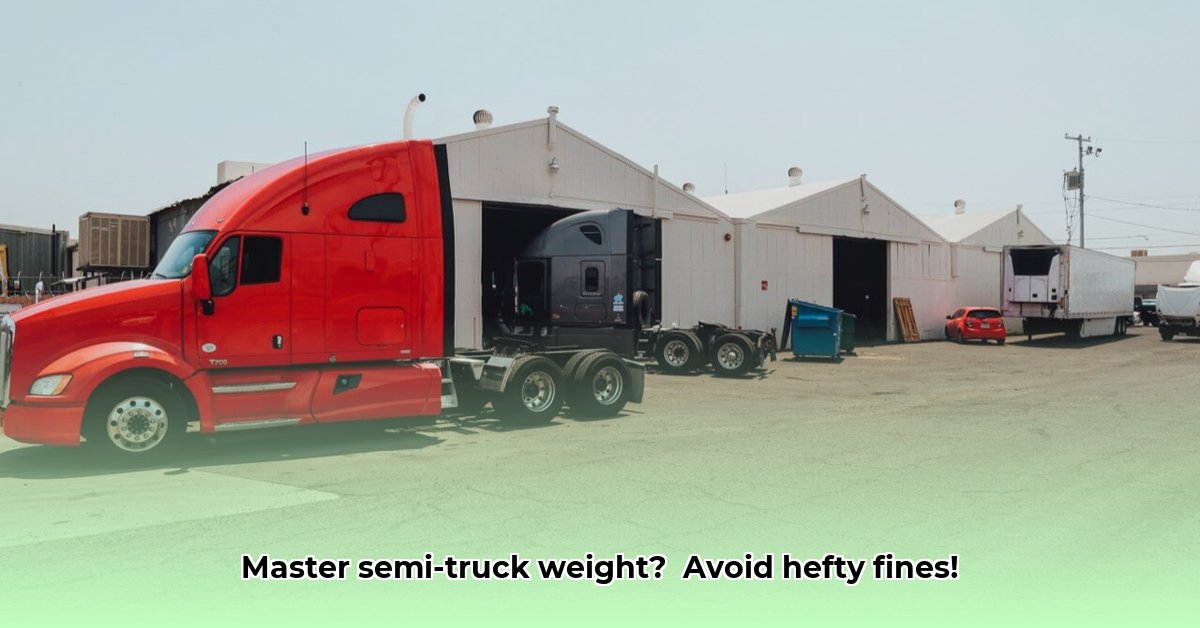
Understanding semi-truck tractor weight is crucial for safety and legal compliance. This guide provides actionable steps to ensure your operations remain within regulatory limits and minimize risks. Incorrect weight distribution can lead to accidents, hefty fines, and damage to infrastructure. This guide will provide you with the knowledge and tools to avoid these problems. For more detailed information on weight limits, see this helpful resource: Weight Limits Guide.
Understanding the Weight Components
Several factors contribute to a semi-truck's total weight. Accurate assessment of each component is critical for compliance.
Key Weight Components
- Tractor: The weight of the cab and chassis, typically ranging from 10,000 to 25,000 pounds, depending on size, features, and make. This weight is generally provided by the manufacturer.
- Trailer: The empty weight varies from 10,000 to 15,000 pounds, depending on the type and size. This information is usually found in the trailer's documentation.
- Cargo: This is highly variable and the most significant influencing factor in overall weight. Accurate weighing is critical; underestimation is a common cause of non-compliance.
- Fuel: The weight of the fuel in the tanks is influenced by tank size and type of fuel. A full tank adds significant weight.
- Driver: The driver's weight adds approximately 200 pounds.
Legal Weight Limits: Federal and State Regulations
Federal and state regulations dictate maximum weight limits for various aspects of a semi-truck's weight distribution. Non-compliance results in severe penalties.
Key Weight Limits
- Gross Vehicle Weight (GVW): The combined weight of the tractor, trailer, cargo, fuel, and driver. Federal limits usually set this at 80,000 pounds, but state-specific limits may be lower.
- Axle Weights: The weight distributed on each axle. Federal and state regulations specify maximum limits for single and tandem axles to prevent damage to roads and bridges. These limits are crucial; exceeding them, even with a legal GVW, results in penalties.
Important Note: State regulations vary significantly. Always check the specific rules for your route.
Weight Distribution and Axle Configuration
Proper weight distribution is paramount for safety and legal compliance. Axle configuration significantly impacts how weight is distributed.
Optimizing Weight Distribution
Uneven weight distribution can lead to instability, handling issues, and damage to the vehicle and roadways. Evenly distributing the weight across all axles maximizes stability and minimizes risks.
Practical Tips for Effective Weight Management
Several strategies can ensure compliance and proactive weight management.
Actionable Weight Management Steps:
- Invest in accurate scales: Regularly weigh your truck at certified scales. This is the most fundamental practice for accurate weight management. Do not rely on estimations.
- Master efficient loading techniques: Distribute cargo evenly, placing heavier items centrally and lower. This minimizes the risk of sway and improves stability.
- Minimize unnecessary weight: Regularly remove unused items from the truck. Reduce unnecessary weight wherever possible, improving fuel efficiency and overall weight management.
- Implement driver training: Thorough driver training, focusing on procedures, is essential for consistent compliance.
- Adopt advanced technology: Explore telematics systems for real-time weight monitoring and route planning tools that consider weight restrictions. These tools enable proactive adjustments.
Consequences of Non-Compliance: Risks and Penalties
Non-compliance with weight limits carries severe repercussions.
Penalties for Non-Compliance:
- Substantial fines: Exceeding weight limits leads to significant fines, which can seriously impact profitability.
- Operational downtime: Violations can result in delays and even impoundment of the vehicle, disrupting operations and shipment schedules.
- Damage to infrastructure: Overweight vehicles contribute to damage to roads and bridges, which often results in costly repair and maintenance.
- Safety risks: Overloading vehicles dramatically increases the risk of accidents, injuries, and serious damage. This poses risks to drivers, other motorists, and the public.
Technological Advancements in Weight Management
Technological advancements facilitate efficient weight management.
Modern Technology Solutions:
- Weigh-in-motion systems: These systems automatically weigh vehicles while in motion, streamlining the weighing process at weigh stations.
- Telematics systems: These real-time monitoring systems allow drivers and fleet managers to track weight data, optimizing load distribution and anticipating potential issues.
Conclusion: Prioritizing Safety and Compliance
Responsible weight management is not just about avoiding penalties. It's about ensuring safety and efficiency. By understanding the components of your truck's weight and adhering to regulations, you contribute to safer roads and a more sustainable transportation industry. Investing in accurate weighing, effective loading strategies, and advanced technology are critical steps towards compliance and success.